Introduction
“Synchysis of Art Series” was inspired by my study of ancient Attic vases and their painted imagery, which provide us with many details about Athenian life during the classical period that we cannot access through texts. I admired the artistic style of the paintings and how these vases were both durable and fragile.
Ancient Attic vases have been photographed for archival and educational purposes. What new aspect could I photograph? I was then inspired by Wolfgang Tillman’s photographs, which exemplify this imaginative approach as he created by exploring mistakes in the photographing process of photograms and by using different chemicals to make abstractions.
Process
I began by photographing Attic vases, taking close-ups to capture the shape of the vase and its clay texture, rather than focusing on the stylistic painting for which classical pottery is renowned. While taking the photographs, I also wanted to utilize the camera’s blur effect capability. It is one of the simplest techniques of abstraction because it occurs during the photo-taking process, rather than later in the editing process.
Next, I printed transparencies. The correct side printed solidly. However, on the other side, I found that the ink rests on the top of the transparency making it easier to manipulate. I used my hands, paintbrushes, nail polish and also hydrogen peroxide to alter the images on the other side of the transparencies.
In contrast to Attic paintings, which have remained remarkably intact for thousands of years, it is intriguing and ironic that the ink of a printer can become so easily manipulated and damaged. This is also observable in one of the transparencies which I had left in a classroom drawer. When I returned two days later, the picture had abstracted without my intervention. The colors had bled as a result of moisture.
In using transparencies, I also considered the different purposes of transparencies and the various textures at play during this project. Transparencies are used in art for making photograms. However, I remember my elementary school teacher using transparencies on an overhead projector. This reminded me of the immense educational value to be found in Greek vases and their paintings, in addition to an appreciation of their illustrious artistry.
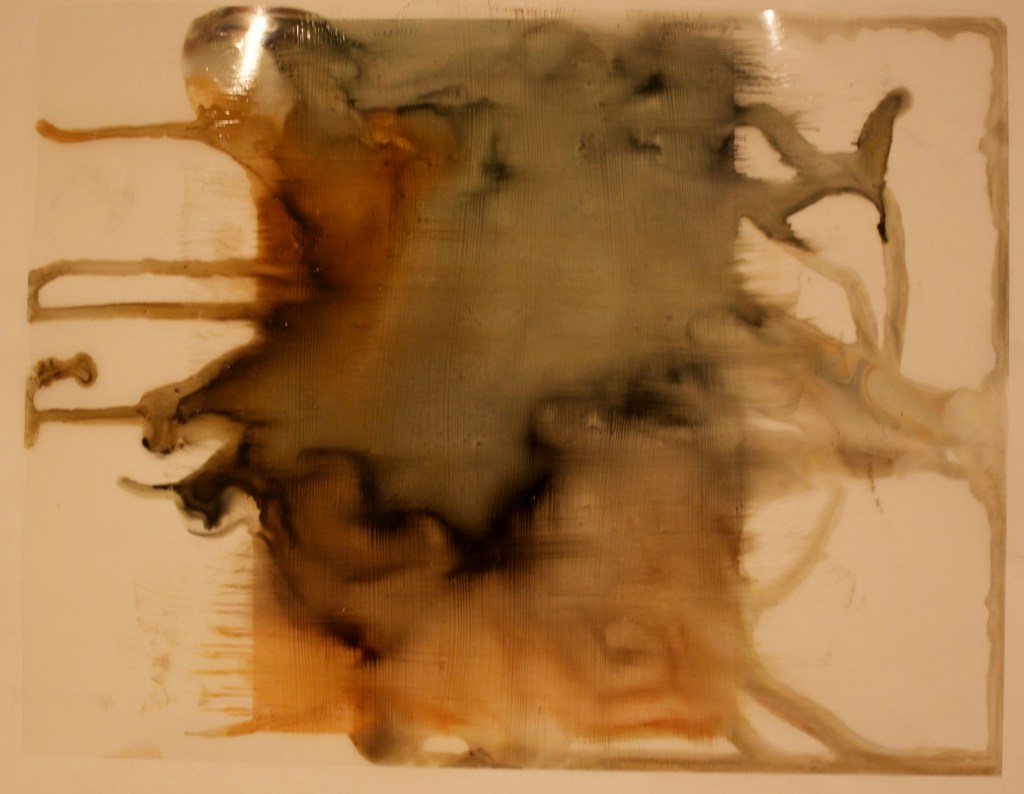
Regarding texture, I considered the clear, modern plasticity of the transparencies in contrast to the ancient earthy clay of the vases I photographed. In one of my abstracted photographs, Wash (Bleeding Ink), I first completely displaced the ink by pouring nail polish on the transparency and I left it to dry for two days. Next, I used a wide-bristled paint brush to make cross-hatches suggestive of textures that can be seen in the fabrics of clothing and canvases, both materials that hold art.
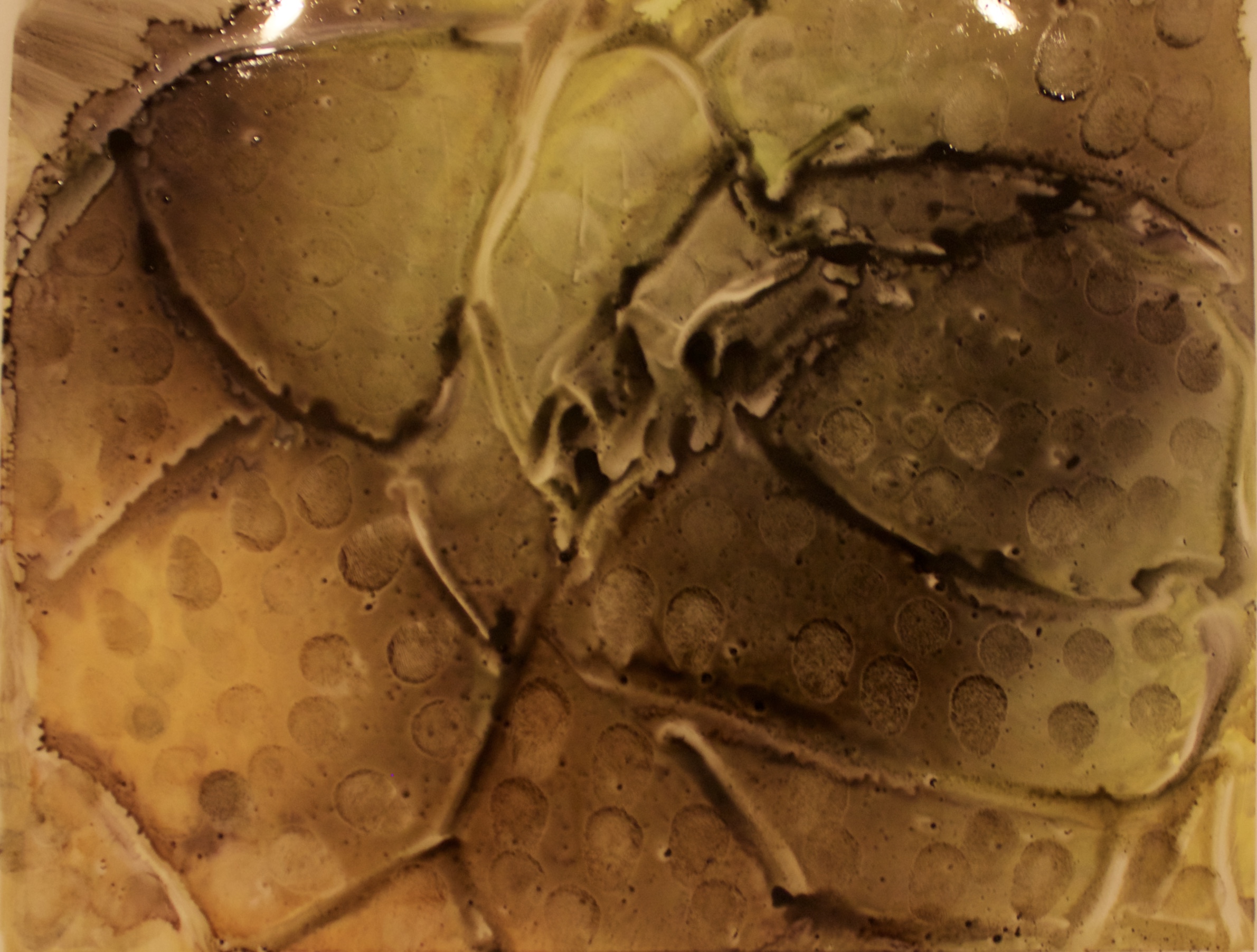
The idea of fabric, as well as ceramics, recalled to mind an argument in modern discourse regarding legitimizing crafts (fabric and ceramics) as high or “real” art. Ancient Greeks valued their vases as utilitarian objects with distinct functions, not as admired works exhibited in art museums. I used paint brushes to produce various impressions in the ink of the images.
I imagined the “synchysis” occurring throughout this entire process: the content of the image is painting, then I turned this image into a photograph, and now with the ink on top of the paper, I have returned the image to painting, especially when I use paintbrushes to move the ink. Finally, I took a picture of the transparencies, once again making them photographs.
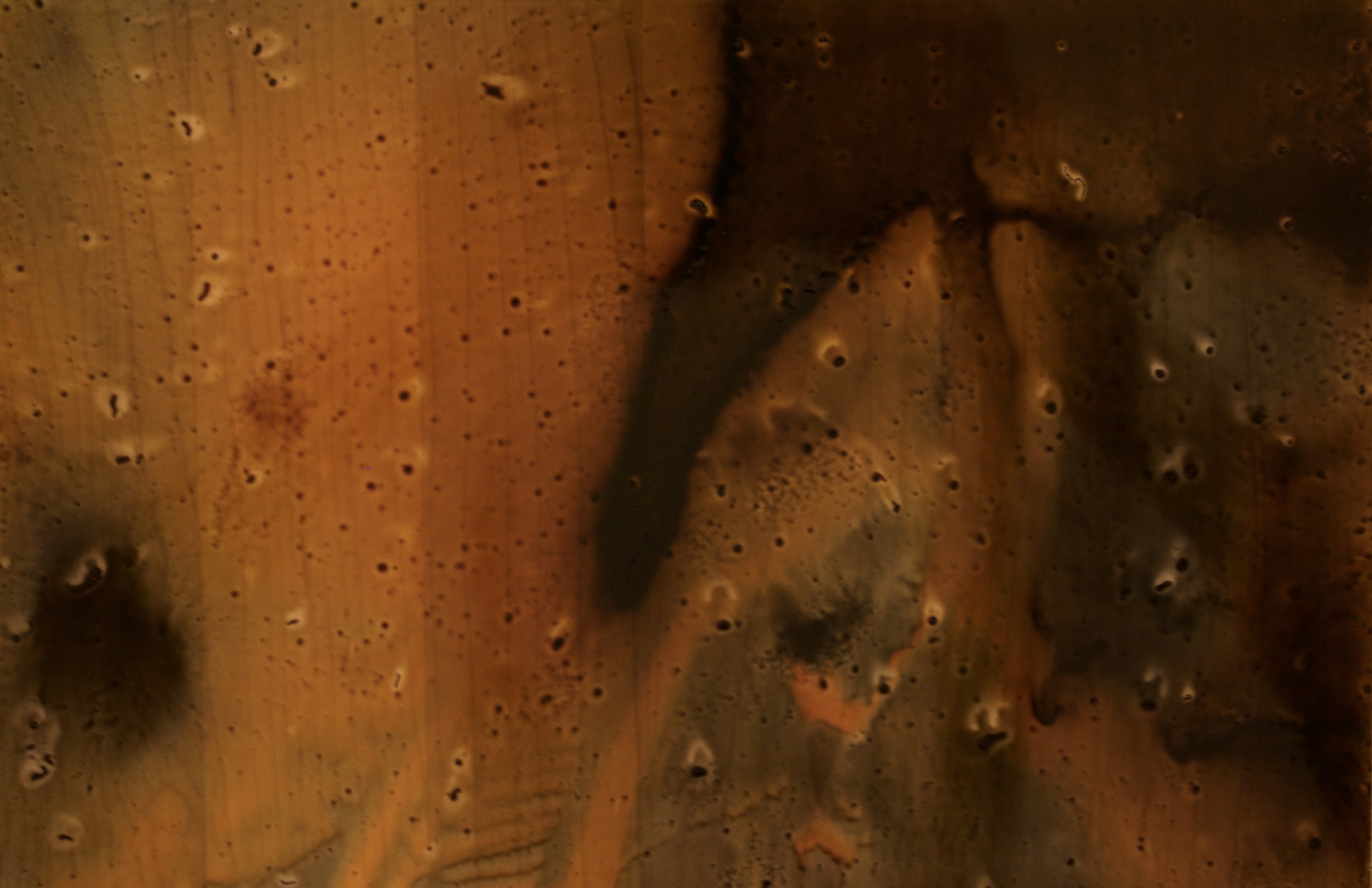
Synchysis of Art Series by Tashi Treadway


Conclusion
How I approached my photographic project is reflected in Barbara Kasten’s statement, “Process seems to be at the corner of our explorations. Not only the underlying process of photography but that of our own investigative ways, referencing across the platforms available to us now,” in Notes and questions to myself.
I wanted to investigate the unnatural aspect and absence of reality present in abstraction. This sentiment is expressed by Kasten in the following quote: “I hope to neutralize assumptions about photography through abstract. Instead of seeking to show something definitively or offer photographic proof of existence. I seek to create a variety of circumstances that are commentary on the ambiguity of existence.”
Giuliana Bruno’s chapter, Surface: Matters of Aesthetics, Materiality and Media also inspired my thinking on photography. She states, “The textural deterioration, the corrosion, the wear and tear strongly evoke the actual effects of the environment” (Bruno, pg 125). Many of the vases I photographed were broken in some way. Not only was it interesting to photograph the shape of the Attic vases, but also their imperfections. I was interested in zooming in on those aspects which genuinely speak to how truly old these ancient vases are.
Both readings have influenced my expanding perspective on photography and support the purpose and process of my project, whereby we use the photographic apparatus to see new worlds and to inspect more closely many aspects of art and life we don’t usually see.

 Tashi Treadway